

Vintage Cartier Dials Explained: Original, Genuine Replacement, and Redial
When looking for a vintage Cartier watch, you may notice differences in dial color, markings, or design even among watches of the same model.
Some of these differences reflect changes in production specifications over time, while others result from dial replacements carried out during servicing.
To understand vintage Cartier dials, it is helpful to distinguish between three categories:
-
Original factory-installed dial: The dial fitted when the watch was first manufactured and never subsequently replaced.
-
Genuine Cartier service replacement dial: A new, genuine Cartier dial installed by Cartier during servicing.
-
Redial: A dial that has been repainted, refinished, or reprinted by a party other than Cartier.
The first two categories are both genuine Cartier dials.
In this guide, ANTE TOKYO explains the differences and what buyers should know before choosing a vintage Cartier watch.
What Are the Three Main Types of Vintage Cartier Dials?
1. Original Factory-Installed Dial
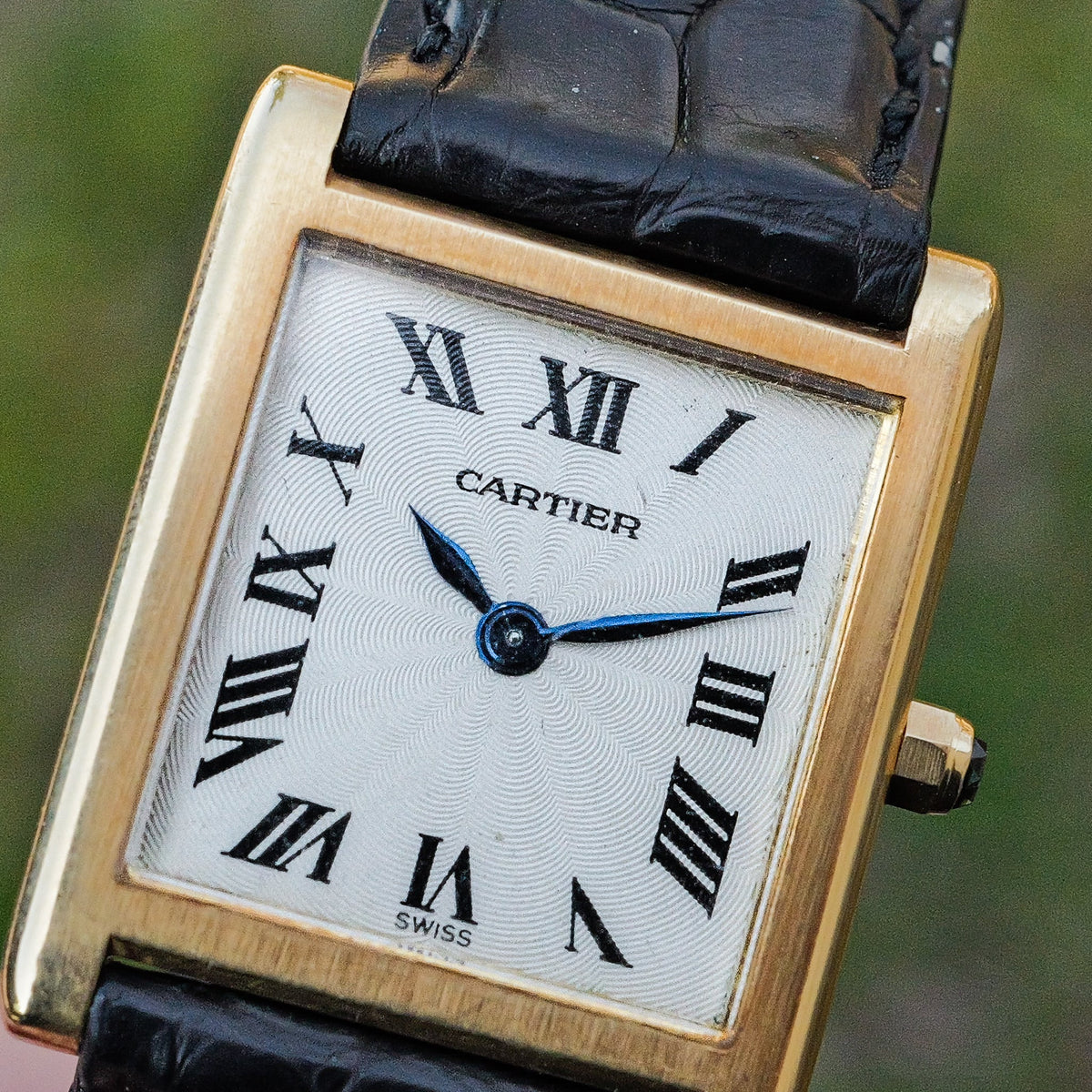
An original factory-installed dial is the dial that has remained with the watch since it was manufactured, without being replaced.
It may retain the printing, color, and other characteristics associated with its original production period.
Over many years, a dial may develop discoloration, fine cracks, or other signs of natural aging.
For many vintage watch enthusiasts, these changes are part of the character and appeal of an older timepiece.
2. Genuine Cartier Service Replacement Dial
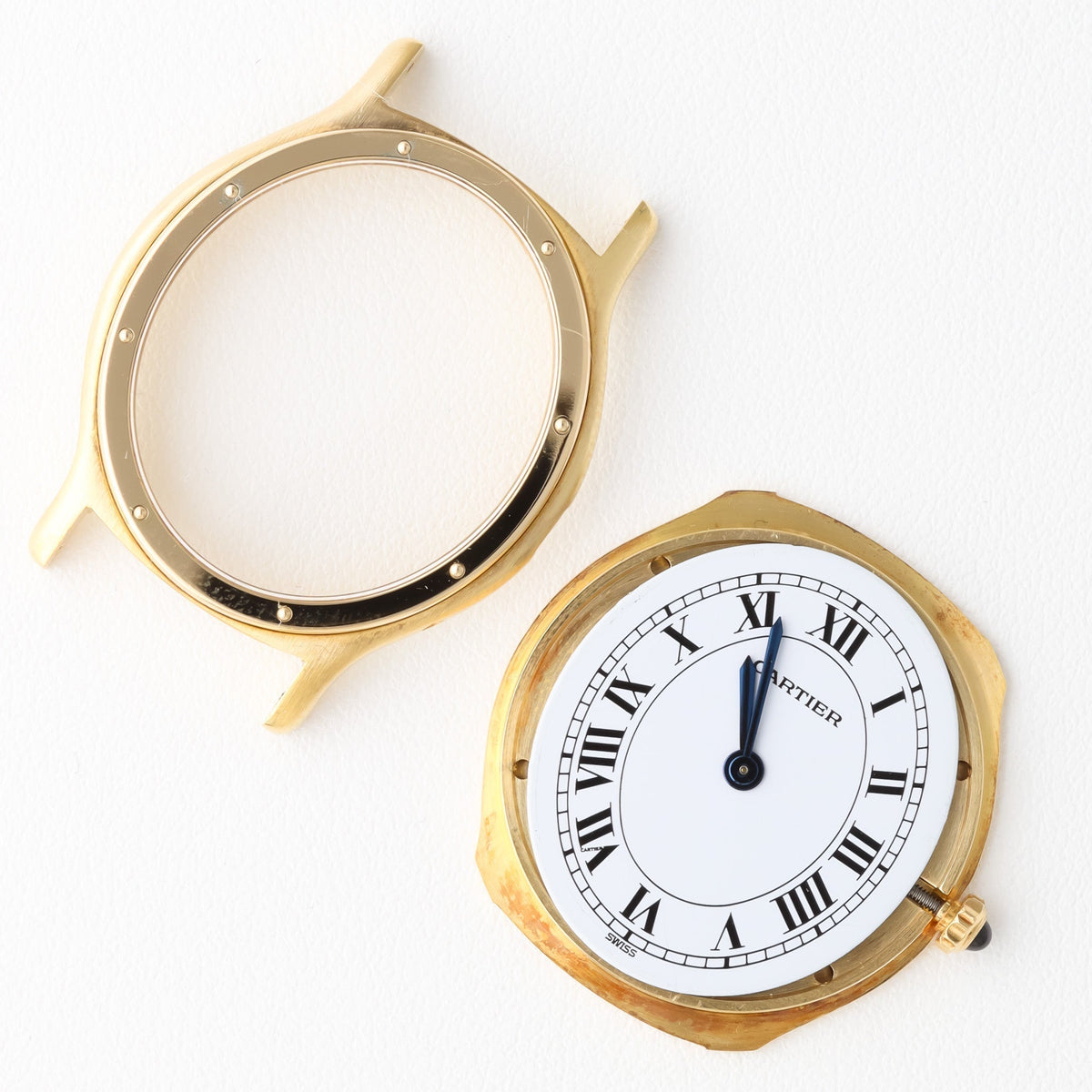
A genuine Cartier service replacement dial is a new, authentic Cartier dial installed by Cartier during servicing or repair.
A dial replaced by Cartier is still a genuine Cartier component. It is not counterfeit or inherently inferior in quality.
However, depending on when the replacement took place, its printing, color, typography, or other details may differ from the dial originally fitted to the watch.
For buyers who value period-correct details, it is therefore important to understand whether the dial has been replaced.
3. Redial
A redial is a dial that has been repainted, refinished, or had its lettering or logo reapplied by a party other than Cartier.
Unlike replacing a dial with a genuine Cartier component, redialing involves altering the appearance of an existing dial.
In ANTE TOKYO's experience, openly offered redialed watches are relatively uncommon among specialist vintage watch dealers.
They may occasionally appear in private sales or online auctions.
However, the sales channel alone cannot establish whether a dial has been refinished.
Because originality is an important part of our selection standards, ANTE TOKYO does not offer watches with redialed dials.
Can PARIS, SWISS, or SWISS MADE Markings Identify an Original Cartier Dial?
Vintage Cartier dials may feature markings such as “PARIS,” “SWISS,” or “SWISS MADE.”
However, a PARIS marking does not automatically mean the dial is factory-original, and a SWISS marking does not automatically indicate a replacement.
Specifications varied by model and production period, and some Cartier watches were originally manufactured with SWISS markings.
In addition, a genuine dial replacement performed by Cartier may result in different dial markings.
For this reason, dial text should be evaluated alongside the model, estimated production period, printing characteristics, and consistency with the watch as a whole.
No single marking is sufficient to establish a dial's history.
Is an Original Dial Better Than a Genuine Cartier Replacement Dial?
Both are genuine Cartier dials, but they offer different qualities.
A factory-installed dial preserves details from the watch's original production period, including its printing, color, and any natural aging that has developed over time.
A genuine Cartier replacement dial may have a different appearance or condition, depending on the specifications available when the replacement was performed.
If preserving the watch's original period characteristics is your priority, a factory-installed dial may be more appealing.
If you place greater importance on appearance or condition, a genuine Cartier replacement dial may also be a suitable choice.
However, a replacement dial is not necessarily in better condition, and a factory-installed dial is not automatically more valuable.
The watch's overall condition, rarity, specifications, and individual characteristics should all be considered.
What Does ANTE TOKYO Look for When Evaluating Vintage Cartier Dials?
At ANTE TOKYO, we consider more than whether a dial is original.
We examine its consistency with the model and production period, as well as its condition and signs of aging.
For factory-installed dials, we value natural aging and aim to avoid unnecessary alterations.
We also recognize genuine Cartier service replacement dials as authentic Cartier components.
What matters is not simply whether a dial looks clean or attractive, but understanding its condition and how it came to be part of the watch.
ANTE's Philosophy
Vintage Cartier watches have different stories to tell.
A factory-installed dial may preserve the character of its original era, while a genuine Cartier service replacement dial reflects a different part of the watch's history.
Neither should be judged by appearance alone.
At ANTE TOKYO, we believe that understanding these differences helps buyers appreciate the individuality of each watch and make a more informed choice.